

We sell robotic agricultural services — not just the robot.
Our products
One platform. Unlimited attachments
Flagship autonomous platform
MAX T100
Heavy-duty autonomous platform
The flagship autonomous robot platform. Engineered for 24/7 operations, it serves as the intelligent base for every NASL attachment — driving each row, mapping each acre, and carrying the tool the job needs.
Book a demo →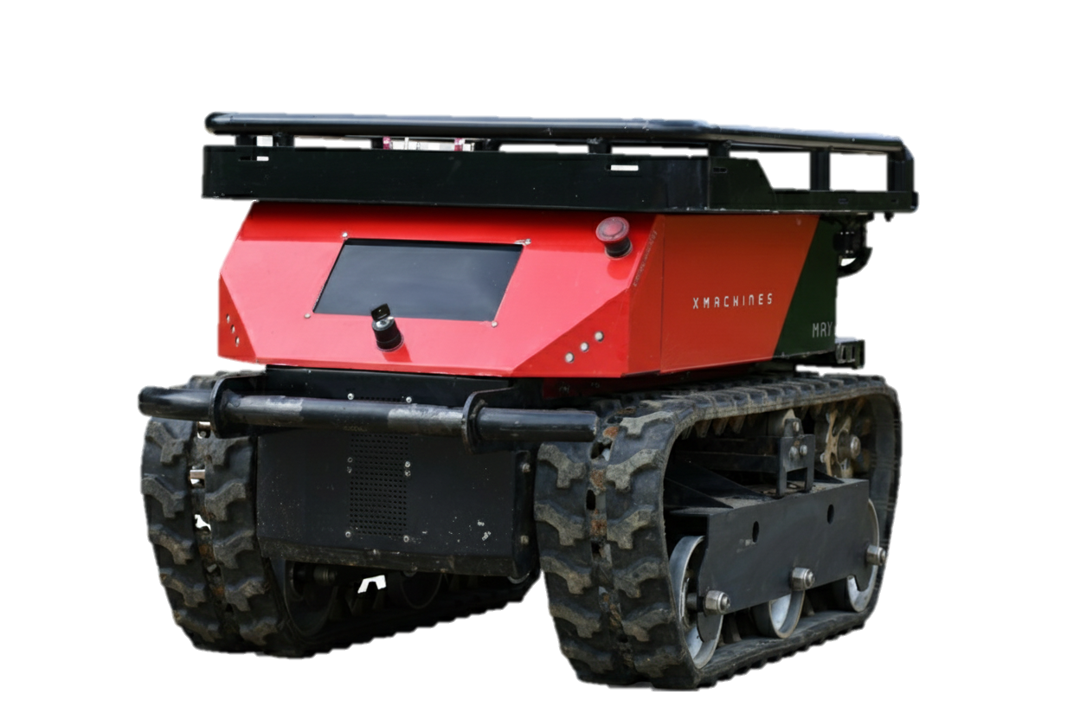

X-Grass Cutter
Low-profile cutting tool for orchards and vineyards. Snaps onto the MAX T100 for uniform, autonomous maintenance.

X-Cultivator
Precision soil implement that mounts to the MAX T100. Adapts to soil density in real time for a perfect seedbed.
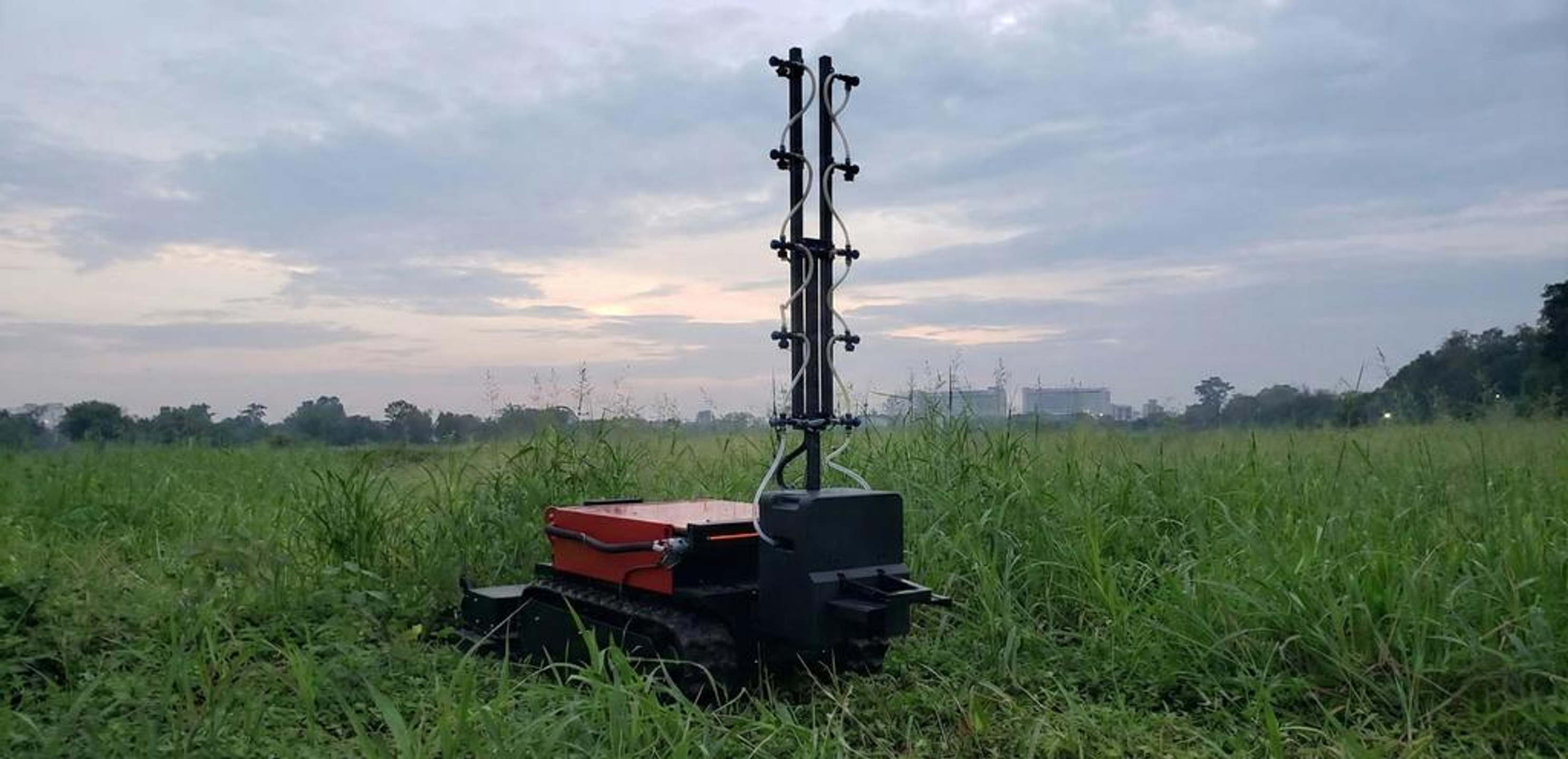
X-Sprayer
Targeted application attachment.
What we do
Field operations, on demand
You order the operation — the robot shows up and does it. Priced per hectare, per operation. Ordered here by what replaces the most manual labor.
Daily monitoring & pest scouting
The operation that steers all the others — continuous, proactive scouting that cuts waste and cost across the whole cycle.
Grass cutting
A repetitive manual job, done uniformly and autonomously — pass after pass.
Pesticide spraying
Targeted application driven directly by the monitoring results — less chemical, lower drift.
Fertilizer spraying
Recurring and fully automatable — fed by the same field map.
Pollination
Time-sensitive, repeated work during bloom — exactly what a robot never misses.
Seeding
Season-opening operation, executed on the mapped routes.
Plowing
Heavy seasonal groundwork on the same autonomous platform.
Expansion path: one operation → several operations → the fully integrated crop cycle.
Where it works
One robot. Every environment
Built and field-tested where the labor bill is heaviest — palm farms and greenhouses.
Serves the palms, row by row.
Spraying, cutting and sterilization across palm farms — replacing an army of seasonal labor and the logistics bill that comes with it.

A standard house in 22 minutes.
One robot covers a 360 m² greenhouse in about 22 minutes — 25 houses in roughly 9 hours, work that traditionally takes 50–75 seasonal workers.

Keeps the panel rows clear.
Manages vegetation under and between panel rows — preventing shading and fire risk with no mowing crews and zero herbicide.
The business model
Robotics-as-a-Service
The farm doesn't hire a seasonal workforce. It orders an operation — and the robot comes when needed.
Traditional model
- The farm hires seasonal workers
- Monthly salaries — a fixed cost
- Workers on site all season long
- Performance varies crew to crew
- You manage labor
ROBOTAT model
- The farm orders the service
- SAR per hectare, per operation — a variable cost
- The robot comes when it's needed
- Standardized, measurable performance
- We manage the robot fleet
Our success metric: manual labor hours replaced, per hectare.

The ROBOTAT app
Request the service from your phone
Pick the operation and the area — the robot arrives when needed. Ordering, scheduling and follow-up, all through the ROBOTAT app.
How it works
Deploy. Inspect. Act
A three-step program from first farm visit to autonomous operation. Most deployments are live within 60 days.
Phase 01
We map your farm.
A ROBOTAT agronomy team walks your fields, defines scouting and treatment routes, and tailors the mission to your crop and season. No commitment, no charge for the assessment.
Phase 02
Robots go to work.
Continuous autonomous patrols. Sensors collect inspection data, anomalies are surfaced in real time, and your operators see everything in a single dashboard.
Phase 03
Findings become actions.
Findings trigger work orders in your farm management system or ERP. Operators intervene only when they need to. The whole loop — detection to dispatch to resolution — closes automatically.